
Heartopia's Cozy Creative System
See how Heartopia used cozy game ad creatives, event updates, and social scenes to scale UA across Japan, Taiwan, Hong Kong, and wider Android coverage.
Maya Chen
Content Editor, Mobile Game UA
Published
Updated
UA Teardown
According to CreativeScope data, Heartopia ran 2,807 tracked campaign records and 1,378 tracked ad creatives across iOS and Google Play from June 22 to July 20, 2026. The campaign's clearest lesson is practical: a life simulation game can turn homes, outfits, friends, hobbies, and limited-time events into separate creative jobs for UA testing.
Key Takeaways
- Heartopia's monitored campaign reached 505M estimated impressions during the review period. Treat this as relative scale, not verified spend or revenue.
- The July 10 event window changed the creative mix: underwater scenes, collaboration visuals, outfits, and reward messages gave the same product promise new openings.
- iOS coverage was most concentrated in Japan, Taiwan, and Hong Kong; Android coverage spread more widely across the United States, South Korea, Southeast Asia, and parts of Europe.
- The strongest creative pattern is modularity. Heartopia keeps reusing four jobs: show a space, project an identity, make social play feel low pressure, and make events look current.
- For UA teams, the testing unit should not be "cozy" as one mood. Test the home outcome, avatar fantasy, social promise, light activity, and event hook as separate angles.
Data Scope and Metric Guardrails
Data in this article describes monitored campaign activity, creative coverage, estimated impressions, and public store signals. It should not be read as verified spend, ROAS, revenue, or precise daily downloads.
| Field | Scope |
|---|---|
| Data period | June 22 to July 20, 2026 |
| Source | CreativeScope monitoring |
| Platforms | iOS and Google Play advertising observations |
| Tracked campaign records | 2,807 across iOS and Android observations |
| Tracked ad creatives | 1,378. The same media asset may appear across multiple placements or platforms. |
| Estimated impressions | 505M. CreativeScope estimate, used for relative scale only. |
| Google Play public install band | 10M+ downloads shown publicly on Google Play during the review period. |
Why This Case Matters for UA Teams
Heartopia, published by XD Entertainment, sits in the life simulation space. Its store positioning centers on dream homes, hobbies, friends, and a cozy town. Those features matter for UA because they are highly visual. A house can be shown before and after decoration. An outfit can be understood instantly. Fishing, cooking, dancing, gardening, and bug catching can be read as low-pressure actions without explaining a complex system.
The ads therefore do not need to open with lore, economy, or progression. They can start with a result the viewer understands: a decorated room, a new outfit, a shared street scene, or an event reward. That lowers comprehension cost in the first few seconds.
The stronger takeaway is that Heartopia does not depend on one soft atmosphere. It breaks "cozy life" into modular creative assets: home outcomes, avatar identity, friend interactions, hobbies, event rewards, and new seasonal scenes.
The Campaign Shift After July 10
From June 22 to July 9, Heartopia's tracked activity looked like a steady creative validation phase. iOS stayed more concentrated, Android was more restrained, and the creative mix leaned on core lifestyle assets: home building, outfits, town life, and everyday scenes.
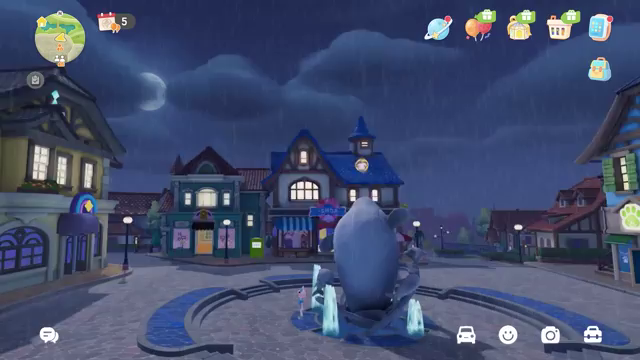
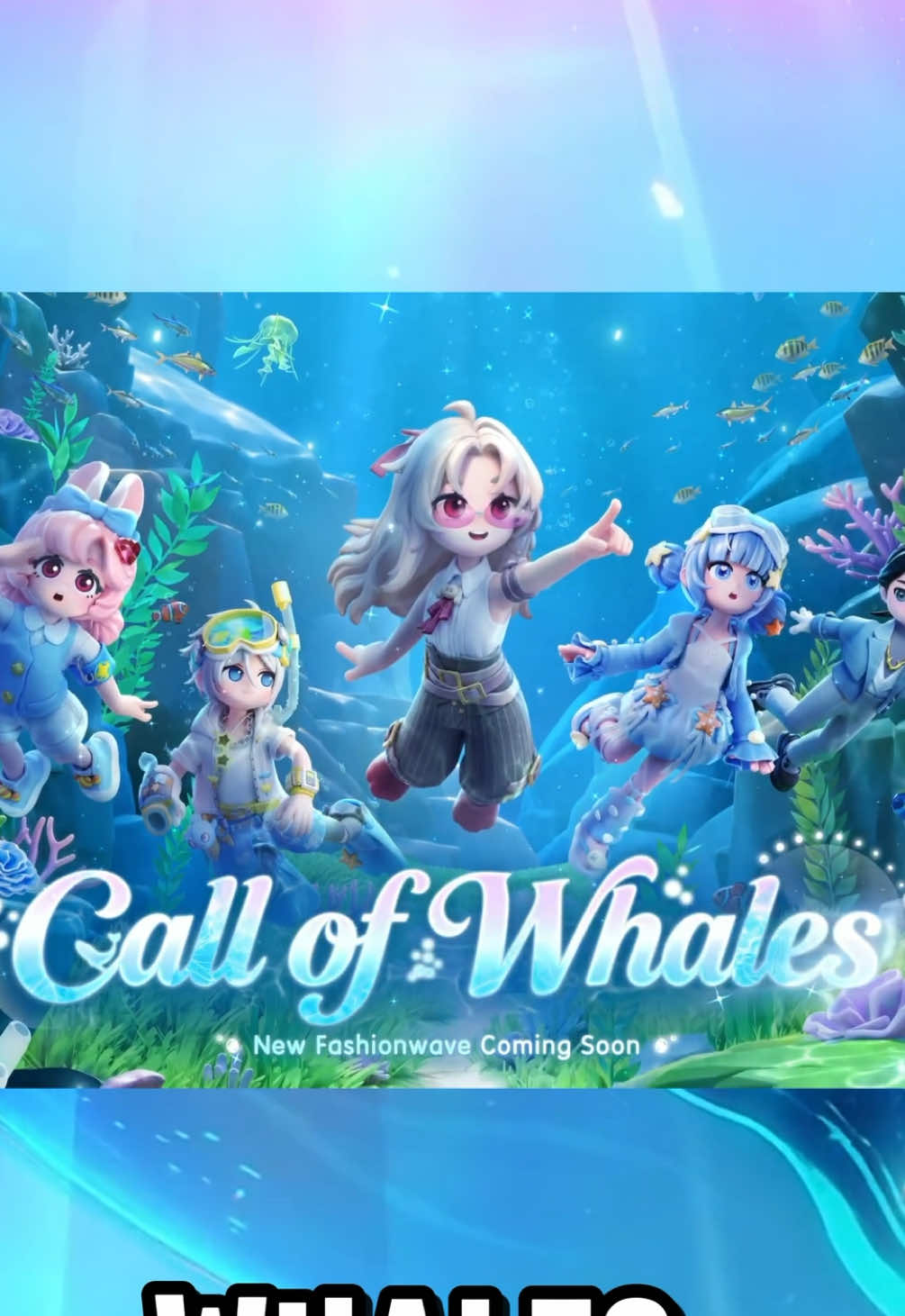
After July 10, tracked campaign records and creative volume increased. Android activity became more visible in CreativeScope data, while event-led creatives gave the same product promise new wrappers. Call of Whales introduced underwater scenes and ocean visuals. SANRIO CHARACTERS brought furniture, outfits, and collection value. Later event previews kept the world from feeling static.
For a slow-paced simulation game, this is a practical refresh mechanism. A beautiful-town creative can fatigue if every ad shows the same house and garden. Version content keeps the core promise stable while changing what the viewer sees first.
Market and Channel Signals
Heartopia's tracked iOS campaign coverage was concentrated in Japan, Taiwan, and Hong Kong, which together accounted for about 65% of the observed iOS distribution. On Android, the same three markets accounted for about 36%, with broader coverage across the United States, South Korea, Southeast Asia, and several European markets.
This does not prove where spend or revenue was highest. The metric is campaign coverage, not spend, downloads, or revenue share. Still, the structure suggests two different operating modes: keep high-fit East Asian markets stable, then use Android to test wider international coverage with event, reward, and direct scene-showcase creatives.
Channel coverage also looked consistent across platforms. Meta-family placements accounted for about 74.6% of tracked iOS coverage and 74.8% of tracked Android coverage. AdMob and YouTube accounted for about 13.2% on iOS and 15.7% on Android. Several representative high-impression creatives came from AdMob and YouTube, which suggests that longer video assets and strong visual openings still mattered even when Meta provided the broadest surface area.
Google Play Install Records Moved With the Event Push
CreativeScope tracked Google Play install records in three stages. From June 22 to June 30, the recorded install count moved from about 10.31M to 10.37M, a difference of roughly 61K. From July 1 to July 9, it moved from about 10.37M to 10.43M, a difference of roughly 55K. From July 10 to July 20, it moved from about 10.43M to 10.53M, a difference of roughly 104K.
This signal needs a strict reading. The data covers Google Play and Android only, and some daily records may be missing or delayed. The article therefore treats these as recorded install differences between available records, not natural-day download gains. Even with that limitation, the direction moved with the Android-side creative push after the July event window.
The Four Creative Jobs Heartopia Kept Reusing
1. Show the space before explaining the system
Home, garden, seaside, town, and underwater scenes gave the viewer an immediate object of desire. For a life simulation game, this is more efficient than opening with feature lists. The viewer sees the finished space first, then infers the long-term loop.
2. Turn avatar customization into identity projection
Outfit-led creatives did more than show cosmetics. They answered a direct question: who can I become in this world? New clothes, poses, vehicles, and photo moments made customization feel socially visible, which is stronger than a static wardrobe demo.
3. Make multiplayer feel low pressure
Heartopia's social creatives avoided competitive pressure. Friends appear as companions in homes, streets, rooftops, farms, and parties. The implication is not "join a crowded MMO." It is "share a quiet place with someone else."
4. Use events as new first-three-second material
Call of Whales, SANRIO CHARACTERS, and other event messaging refreshed the same core product with new scenes, outfits, and rewards. This is a repeatable pattern for simulation UA: turn every version update into a new opening hook, not just a patch note.
Creative Spotlight
HT-01: The Full Lifestyle Shelf
Estimated impressions: 52.5M | Flight: June 13 to July 13 | Main channels: AdMob / YouTube
This creative places home, avatar styling, scenes, interactions, and rewards into one broad lifestyle shelf. It works for wide acquisition because different viewers can enter through different desires: build a home, dress a character, explore a town, or collect rewards.
Opening structure: space first, then everyday actions, then a larger lifestyle promise.
HT-02: Pastoral Home as an Instant Goal
Estimated impressions: 19.1M | Flight: July 18 to July 20, active during the review period | Main channels: AdMob / YouTube
This type of creative compresses a long-term simulation goal into a finished place. The viewer does not need to understand levels, resources, or task chains before feeling the point of the game.
Opening structure: home anchor, soft environment flow, then the wish to own a similar place.
HT-03: Outfits and Rewards Move the Reason to Install Forward
Estimated impressions: 31.1M | Flight: July 18 to July 20, active during the review period | Main channels: AdMob / YouTube
Outfit creatives carry identity, collection, and timing at once. A new look creates desire; a reward message gives the viewer a reason to act now rather than later.
Opening structure: outfit hook, scene proof, then reward-led conversion.
HT-04: Friend Co-op as Comfortable Companionship
Estimated impressions: 18.3M | Flight: July 19 to July 20, active during the review period | Main channels: AdMob / YouTube
This creative reframes multiplayer as companionship. Homes, outfits, streets, farms, and group scenes make the product feel shareable without making it feel demanding.
Opening structure: relationship first, shared activities second, companionship as the closing promise.
HT-05: Call of Whales Refreshes the Visual Grammar
Estimated impressions: 1.2M | Flight: July 6 to July 20, active during the review period | Main channel: TikTok
Call of Whales shifted the creative pool away from only farms, houses, and gardens. Underwater areas, ocean scenes, beaches, and new outfits gave the campaign a more memorable visual reset.
Opening structure: event name and July 11 launch cue, underwater scene shift, then free-to-play and download messaging.
HT-06: Post-Event Scaling Returns Users to the Core Loop
Estimated impressions: 10.4M | Flight: July 19 to July 20, active during the review period | Main channels: AdMob / YouTube
After the event attracted attention, this creative brought the viewer back to reasons to stay: coastline scenes, home building, avatar styling, and visible progress.
Opening structure: new scenes, avatar and home proof, then achievement and download guidance.
CreativeScope Take
Heartopia's campaign shows how cozy life simulation games can build a creative system from recurring player motivations. The campaign does not look for one louder hook. It rotates angles that are easy to separate in production and testing: a space to own, an avatar to project into, a friend to share with, a hobby to try, and an event that makes the world feel current.
For UA teams, the next test should be framed as a creative job, not a mood test. Compare the home outcome, outfit fantasy, social promise, light activity, and event hook separately. Then use retention, click quality, or downstream install quality to decide which promise deserves more variants.
FAQ
What is the main UA lesson from Heartopia?
Heartopia turns slow life simulation into specific ad moments. Instead of selling an abstract cozy mood, the campaign shows finished homes, outfits, friend scenes, hobbies, and event rewards that can be understood quickly.
Which markets were most concentrated in CreativeScope data?
Japan, Taiwan, and Hong Kong were the densest tracked markets on iOS, accounting for about 65% of observed iOS campaign coverage. Android coverage was broader, with the same three markets accounting for about 36%.
Did the July event change Heartopia's ad strategy?
CreativeScope data shows an increase in tracked campaign records and creative volume after July 10. Event content such as Call of Whales and SANRIO CHARACTERS gave the campaign fresh scenes, outfits, and reward messages.
What should life simulation UA teams test first?
Start with separate tests for home outcomes, avatar identity, low-pressure social scenes, light hobbies, and event urgency. Each one answers a different user motivation and should not be collapsed into one generic cozy message.
Data Notes
CreativeScope metrics in this article are monitored indicators for campaign and creative activity. Estimated impressions are used only as scale context. Campaign coverage should not be interpreted as spend, revenue, or download share. Google Play install movement is described as recorded differences between available records, not verified natural-day downloads.
Get this live in your agent
These rankings come from a single MCP tool. Free key, ask in plain English.
Full genre × market grid?
Team plan unlocks every genre and market cut, plus AI teardowns.