
Social Board Game Ads: A Creative Loop Playbook
Learn how Coin Master, MONOPOLY GO!, Dice Dreams, and Carnival Tycoon turn spins, boards, rewards, and social conflict into UA creatives.
Emma Lee
Editorial Research Contributor
Published
Updated
Creative Intelligence Guide
Social board game ads have become one of the most durable creative systems in casual mobile gaming because they combine three simple jobs: a fast loop, a visible goal, and a reason to care about other players. This CreativeScope guide reviews Coin Master, MONOPOLY GO!, Dice Dreams, and Carnival Tycoon to show how UA teams can turn light mechanics into repeatable mobile game ad creatives without making the first seconds harder to understand.
Key Takeaways
- The core loop is not just spinning, rolling, or collecting. The stronger pattern is action, reward, risk, and social consequence in one short sequence.
- MONOPOLY GO! widened the genre by making the board itself a social map, while Coin Master still shows why direct feedback and attack-defense tension work.
- High-frequency feedback matters early. New players should see coins, progress, building, or a social event before they are asked to understand long-term systems.
- Social conflict does not need to feel hostile. Attacks, shields, raids, and friend interactions work best when the tone stays playful and reversible.
- For UA teams, the practical test unit is a creative promise: free spins, attack a friend, finish a landmark, roll for a surprise, or collect a limited reward.
Data Scope and Source Guardrails
This article avoids revenue, ranking, and market-size claims unless they can be independently verified at publishing time. It focuses on design patterns visible in the reviewed examples: loop frequency, reward clarity, social pressure, construction goals, event packaging, and first-frame readability.
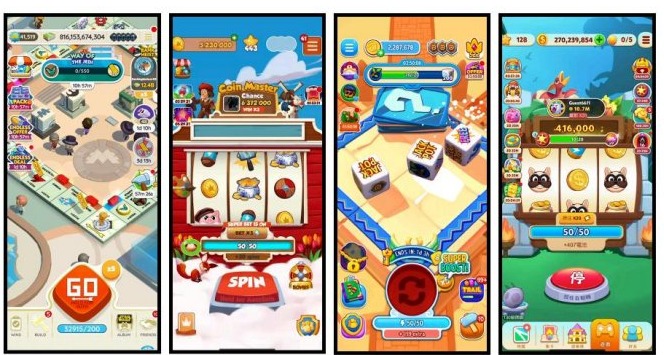 Four social board and coin-and-raid game examples reviewed for loop structure. Replace this local preview image with a final HTTPS asset before publishing.
Why Social Board Game Ads Work
The format looks simple from the outside. A player taps a button, spins a wheel, rolls dice, collects coins, builds landmarks, or attacks another player. Underneath that simplicity is a dense feedback loop. The player gets a result quickly, sees a number move, sees a building improve, or watches another player become part of the outcome.
That structure is friendly to mobile game ad creatives because the hook can be shown in seconds. The ad does not need a long tutorial. It only needs to answer three questions fast: What do I do? What can I win? Who else is affected?
Coin Master makes this compact: spin, receive coins or actions, attack or raid, then spend rewards on the village. MONOPOLY GO! stretches the loop across a board, which makes the action feel more like a journey. Dice Dreams and Carnival Tycoon add softer art direction and construction goals, giving the same reward grammar a different emotional wrapper.
The Four-Part Loop Behind the Ads
| Loop Element | Player Job | Ad Creative Use |
|---|---|---|
| Action | Spin, roll, tap, choose, or complete a short board step. | Open with a button press, dice roll, or finger movement. The viewer should understand the action before any copy appears. |
| Reward | Coins, shields, free spins, jackpot-style moments, cards, or build resources. | Make the payoff oversized and visible. Coin bursts, progress bars, and completion cues carry more weight than abstract benefit copy. |
| Risk | Attack, defend, steal, miss a reward, or lose momentum. | Create mild tension without turning the ad dark. The viewer should feel stakes, not punishment. |
| Social Consequence | Help, attack, raid, defend, trade, or compete with friends. | Show that the action changes another player's world. This turns a solo tap into a social reason to return. |
A strong ad usually does not need all four elements in equal weight. It needs one clear lead. A free-spin creative leads with reward. An attack creative leads with social consequence. A landmark-completion creative leads with visible progress. The job of testing is to find which promise pulls the right users for a given market and channel.
Coin Master Sets the Baseline
Coin Master remains the clearest template for compact social competition. The player does not need to memorize a board. The spin result immediately tells them what happens next: collect coins, protect the village, raid, attack, or keep spinning.
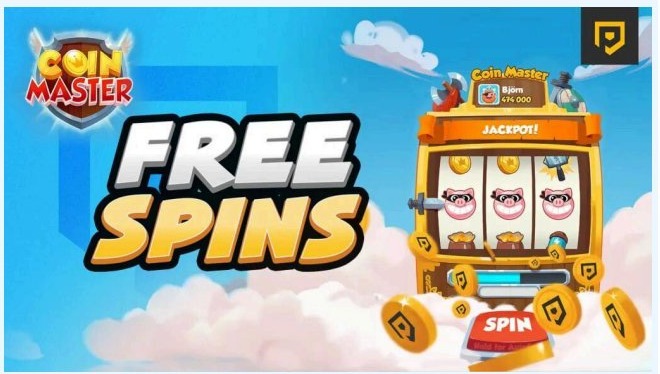
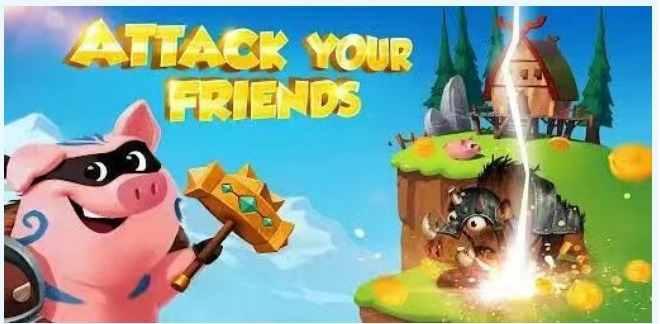
That makes the ad system efficient. "Free spins" can function as a direct acquisition promise. "Attack your friends" adds social tension. A village-building frame shows where the currency goes. None of those angles require a long explanation.
MONOPOLY GO! did more than copy a spin loop. It made the board feel like a social event surface. Dice rolls, property movement, landmarks, events, partner activities, and brand collaborations give the game many ad openings that still remain easy to read. For creative strategy, this is the important shift: the game can test the same core promise through different wrappers. One ad can sell the joy of rolling. Another can sell a limited-time collaboration. Another can focus on building completion, sticker collection, or a friend-driven event. The first frame changes, but the viewer still understands the action quickly.MONOPOLY GO! Widened the Category
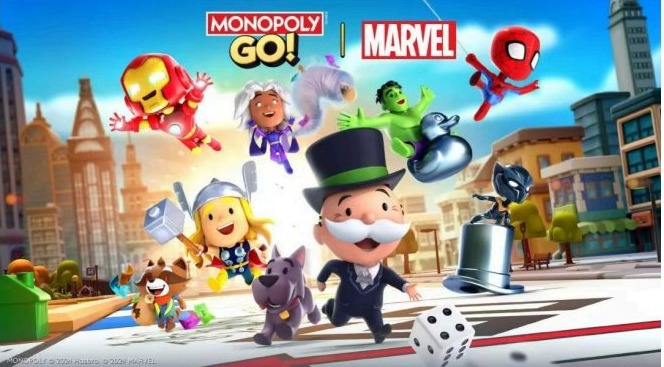 Collaboration-led framing can refresh the same board-game loop without changing the core action.
New social board games usually cannot win by copying the same coin economy and hoping the market overlooks it. They need a sharper entry point. The reviewed examples suggest four clear directions. 1. Make the board easier to read If the first frame is crowded with icons, currencies, pop-ups, and unclear goals, the ad loses the speed advantage of the genre. A good creative isolates one action and one outcome. 2. Give construction a stronger emotional payoff Building a village, landmark, theme park, or home area works better when the ad shows before-and-after progress. Players should see the result of spending currency, not just the currency itself. 3. Keep conflict playful Attack and raid hooks are powerful because they create social stakes. The tone still matters. Bright art, reversible damage, shields, and comedy cues keep the conflict from feeling mean-spirited. 4. Package events as new first frames Events, collaborations, limited rewards, and seasonal boards give UA teams a way to refresh ads without rebuilding the whole creative system. The viewer sees a new reason to act while the core loop remains familiar.Where New Entrants Can Differentiate
The matrix keeps testing disciplined. Instead of launching many similar ads with different art, the UA team can ask which promise is doing the acquisition work. That is where creative intelligence matters: grouping ads by opening hook, loop promise, format, market, and downstream behavior makes the next production sprint more focused. The strongest social board game ads do not sell complexity. They sell a short, readable loop with a social edge. Coin Master proves the value of immediate feedback. MONOPOLY GO! shows how a board, events, and IP moments can expand the same loop into a broader creative system. Dice Dreams and Carnival Tycoon show why softer art direction, construction goals, and event packaging still leave room for differentiated entrants. For UA teams, the next step is to move beyond broad labels such as "spin-loop game" and break the category into creative jobs: reward, attack, defend, build, roll, collect, collaborate, and return. Then track which opening job keeps winning in your genre, market, and channel. What are social board game ads? Social board game ads are mobile game ads built around light actions such as spinning, rolling dice, collecting coins, building landmarks, attacking or defending, and interacting with friends. Why do Coin Master-style ads convert well? They make the action and payoff clear within seconds. The viewer can see a button, a reward, a risk, and a social consequence without learning a complex game system first. How did MONOPOLY GO! change the category? MONOPOLY GO! turned the board into a flexible event surface. Dice rolls, landmarks, sticker collection, collaborations, and partner events give UA teams more first-frame angles to test. What should a new entrant test first? Start with separate tests for free rewards, attack or raid hooks, construction progress, event urgency, and surprise rolls. Each promise attracts a different user mindset. This article is a qualitative SEO guide based on provided category-review materials and selected public-facing examples inside those materials. The article does not make verified claims about spend, ROAS, revenue, market share, or current ranking performance. Before publishing, replace local preview images with approved HTTPS media assets and confirm any third-party metric claims separately.A Practical Test Matrix for UA Teams
Creative Promise
Best First Frame
What to Measure
Free spins or free rolls
Large reward text, spin button, coin burst, or dice result.
Install quality after reward-led acquisition, not just CTR.
Attack or raid a friend
A target, a visible action, and a playful result.
Whether social-conflict users retain beyond the first session.
Finish a landmark
Before-and-after construction or a nearly completed area.
Depth of progression behavior and payer conversion quality.
Join a limited event
Event art, collaboration asset, countdown, or exclusive reward.
Short-window conversion, reactivation value, and creative fatigue speed.
Roll for surprise
Dice roll, mystery tile, jackpot-style reveal, or unexpected board event.
Whether surprise hooks bring players who understand the long-term loop.
CreativeScope Take
FAQ
Related Reading
Data Notes
Get this live in your agent
These rankings come from a single MCP tool. Free key, ask in plain English.
Full genre × market grid?
Team plan unlocks every genre and market cut, plus AI teardowns.