
Magic Defense Ads: The Co-op Hook, Market by Market
Magic Defense's 133 tracked ad plans each name one country, in four localized copy families built on a co-op hook - and its sister title buys differently.
Daniel Brooks
Creative Strategy Analyst
Published
Updated
A Korean AI-education company crossed into tower defense and got two titles onto its home charts. Chinese industry coverage read the launch as a marketing shortfall — small spend, thin creative pull, a missing emotional core. The delivery record tells a different story about the media: 133 ad plans, five countries, and not one plan that names two markets, with copy localized language by language. The sister title tells the other half of that story.
Key takeaways
- Magic Defense: Co-op Wizard TD is a cooperative merger tower defense from Teamsparta Inc., a Korean company whose main business is corporate training and AI education. Its tracked record shows a July 15, 2026 release, 133 ad plans, 54 creatives and 3.55 million lifetime estimated exposure in the window.
- The structure is unusually clean: five countries appear anywhere in the record — Korea, the US, Japan, Taiwan and Saudi Arabia — and every plan attached to any of them names exactly one country. Korea takes 32 plans, the US 15, Japan 9, Taiwan 8, Saudi Arabia 5. There is no cross-market plan to find.
- Localization runs with the targeting. The copy families we could read cover Korean, English, Traditional Chinese and Japanese — one language per major market rather than one language for all of them. Meta carries 126 plans on each of Facebook, Instagram and Threads (94.74%), a single placement package, with Audience Network at 100 plans and Admob down at 7.
- The sister title, Bunker TapTap Defense, is the control group: 75 plans, 41 of them pointing at Korea and 40 of those Korea-only, plus a single plan each for the UK and Poland. Its Meta-side assets frequently carry the raw template strings
{{product.name}}and{{product.brand}}in their headline and body fields, the signature of a template-driven upload as the record stores it. - Where the trade coverage saw two under-powered launches, the delivery record shows one consistent media grammar: cut the budget into country-sized units, then localize the copy per unit. That is a structuring decision before it is a spending decision.
Data scope
This breakdown uses CreativeScope’s advertising records for two titles from the same developer, over August 29 – September 28, 2026 (31 days):
| Title | Creatives | Ad plans | Reinvested creatives | Lifetime est. exposure |
|---|---|---|---|---|
| Magic Defense: Co-op Wizard TD | 54 | 133 | 34 | 3,545,157 |
| Bunker TapTap Defense | 45 | 75 | 20 | 5,198,559 |
Each title is counted separately. The two records are never added together, and neither figure here should be read against the other as a ranking — they are different products with different release dates and different country sets.
Three limits apply. Country and network shares are target-coverage shares under multi-attribution: a plan can list several countries, so shares overlap and never sum to 100%. “Exclusive” means a plan whose delivery-country set contains exactly one market — a targeting decision, not evidence of results. Lifetime estimated exposure is a relative delivery-scale signal for creatives active in the window, not an impression count, and the records carry no spend, installs, conversions or revenue.
One field note: Magic Defense’s tracked record carries a release date of July 15, 2026, matching the date reported for its iOS listing. Bunker TapTap Defense’s record carries a placeholder release date, so no launch date for that title is asserted below; its public store listing shows the most recent update on September 23, 2026.
What the trade coverage argued
The reason these two games are worth reading together is a piece of Chinese industry coverage dated September 24, 2026, which treated them as one story. Its argument, summarized as fairly as we can:
- The premise. TeamSparta is described as a Korean AI-education company — corporate training, AI upskilling, government programs — that entered games as a diversification play, with a game brand and an internal studio behind these two merger tower defense titles.
- The product read. Both titles share a framework borrowed from the merger-defense genre: a battle screen crowded with skill panels, random skill generation, three-into-one upgrades, elemental types, and co-op defense with heroes. The coverage credited the structure — clear rule layers, clean growth paths, longer decision windows than the genre leader — precisely as the thing an education technology company would be good at.
- The criticism. What the coverage said both games lack is the genre’s emotional engine: the whiplash between a run collapsing and a run snowballing. For the sister title it pointed at store images that read as a generic horde-defense game, an unclear win condition, and a hero layer whose necessity never lands. For Magic Defense it pointed at pressure that builds too slowly: health-loss settlement instead of the genre’s tension spikes, so no oscillation between danger and safety to drive replay.
- The marketing read. On media, the coverage called both launches small: limited spend, gameplay-showing creatives whose pull it described as limited, and chart entries it framed as promising but not sustained.
- The conclusion. The diagnosis was cultural, not technical: a company that builds structured rule systems but cannot feel player emotion; a genre where long-run operations and focused regional depth matter more than launch volume.
That is a coherent read of the products, and we are not relitigating it here. But it treats media scale as one number, and the delivery record suggests it is at least two.
Five countries, and no plan that names two
Start with the country picture for Magic Defense, exactly as the record reports it.
| Market | Plans covering | Single-country plans | Share of 133 plans |
|---|---|---|---|
| South Korea | 32 | 32 | 24.06% |
| United States | 15 | 15 | 11.28% |
| Japan | 9 | 9 | 6.77% |
| Taiwan | 8 | 8 | 6.02% |
| Saudi Arabia | 5 | 5 | 3.76% |
Every market in the record is covered exclusively by single-country plans. Coverage counts plans whose targeting list includes the market; the second number is how many of those plans name that country and nothing else.
Two things follow. First: these five countries do not appear side by side anywhere in the record. Because each market’s coverage count equals its exclusive count, no plan can be found that places Korea next to the US, or Taiwan next to Japan — a shared plan would show up as coverage without exclusivity in both markets.
Second, and this is the part worth being precise about: the five markets account for 69 plans, not 133. The remaining 64 plans carry no country in the record’s coverage list at all. We will not dress that up as a finding — it means the record does not show country targeting for roughly half the plan count, whether because those plans are unrestricted or because the country list is simply not attached. What the record does show is unambiguous: every plan that names a country names exactly one.
One language per market, and a Meta package carrying it
Here is where the “small spend” framing runs into trouble. The creative library is not one blanket asset set pushed at five markets. Reading the headline and body fields across the highest-exposure creatives, we found four distinct copy families, each tied to a place:
- English — “Co-op Magic Defense: Play Now!” over “Merge spells & defend the tower.” Short, storefront-style, and clearly built for the US lane.
- Korean — copy that translates roughly to “even if you fail, come back stronger — raise a wizard with no growth ceiling,” with a second line about how you cannot hold the line alone and should team up with other wizards in real time. It sells progression and cooperation in the home market’s idiom.
- Traditional Chinese — “two-player squads, defend the last magic tower together,” paired with a line inviting players to download and feel the fastest magic tower defense. Squad framing, Taiwan lane.
- Japanese — copy that translates to “team up with friends, merge magic, defend the tower,” with a second line promising a comeback summon that sweeps the monsters away. Comeback framing, Japan lane.
Four languages, five markets, and the mapping is almost one-to-one: Korea gets Korean, the US English, Taiwan Traditional Chinese, Japan Japanese. Only Saudi Arabia’s five plans come with no matching copy family in the set we could read. That is not localization as an afterthought; it is localization as the targeting layer, executed per country.
The network side is just as disciplined.
Plan-coverage share under multi-attribution; overlapping shares do not sum to 100%. Facebook, Instagram and Threads at an identical 126 plans means one Meta placement package, not three separate buys.
Seven platforms in total, but the shape is a core and a shadow: one Meta package doing almost all of it, a thin Admob lane for statics, and three YouTube plans that barely register. If the plan were to buy cheap reach at scale, this is the wrong configuration. If the plan were to keep every purchase inside one measurable package while testing a market with localized copy, it is exactly the right one.
Creative Spotlight — four languages, four lanes
Each card below is the cover frame of one copy family’s highest-exposure video in the window. Left to right in the table: the English lane for the US, the Korean lane for the home market, the Traditional Chinese lane for Taiwan, the Japanese lane for Japan.
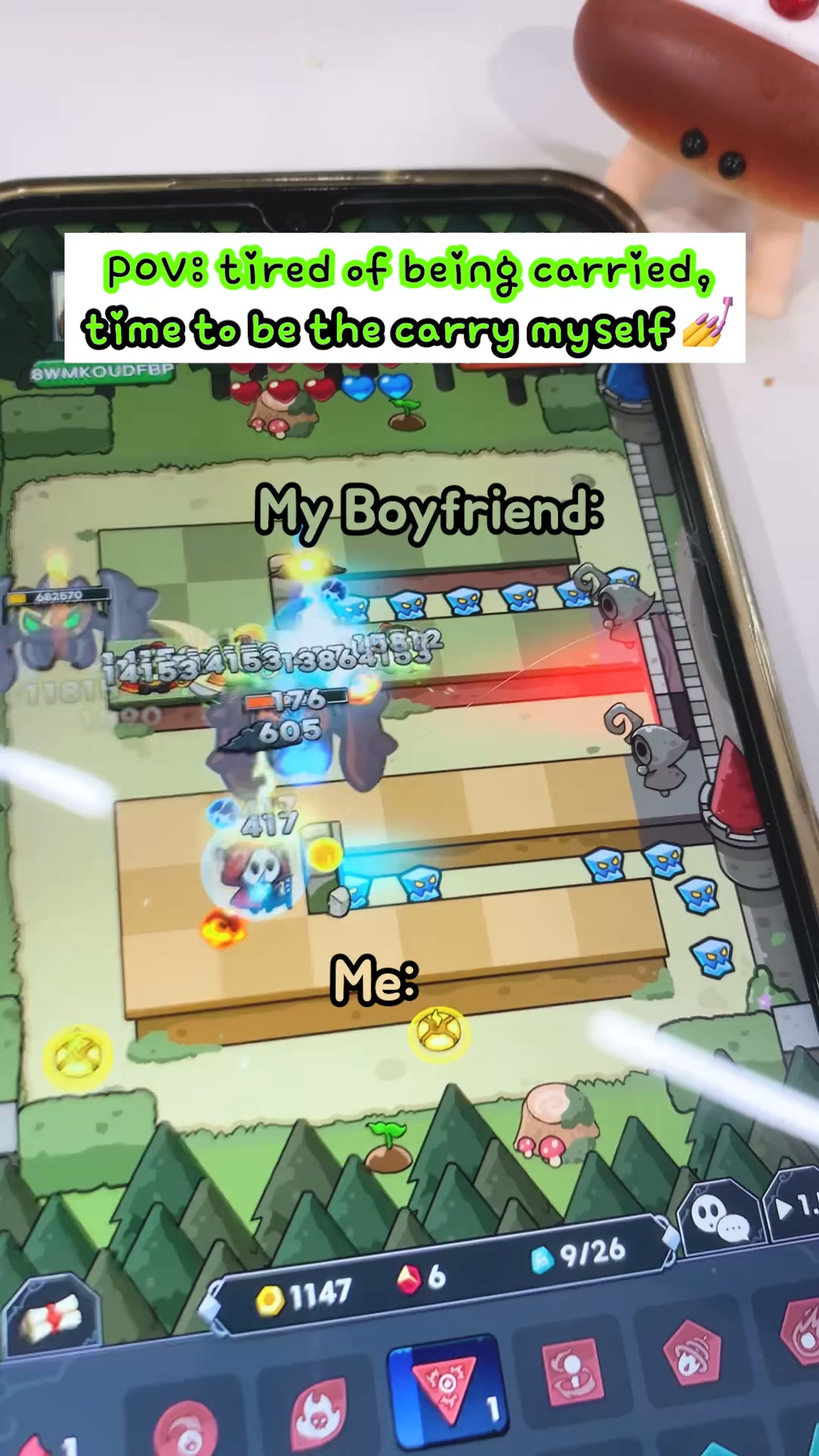
Spotlight 1 — The English lane (US)
“Co-op Magic Defense: Play Now!” over “Merge spells & defend the tower.” The window’s highest-exposure asset at 105,491, running across a five-cut family.
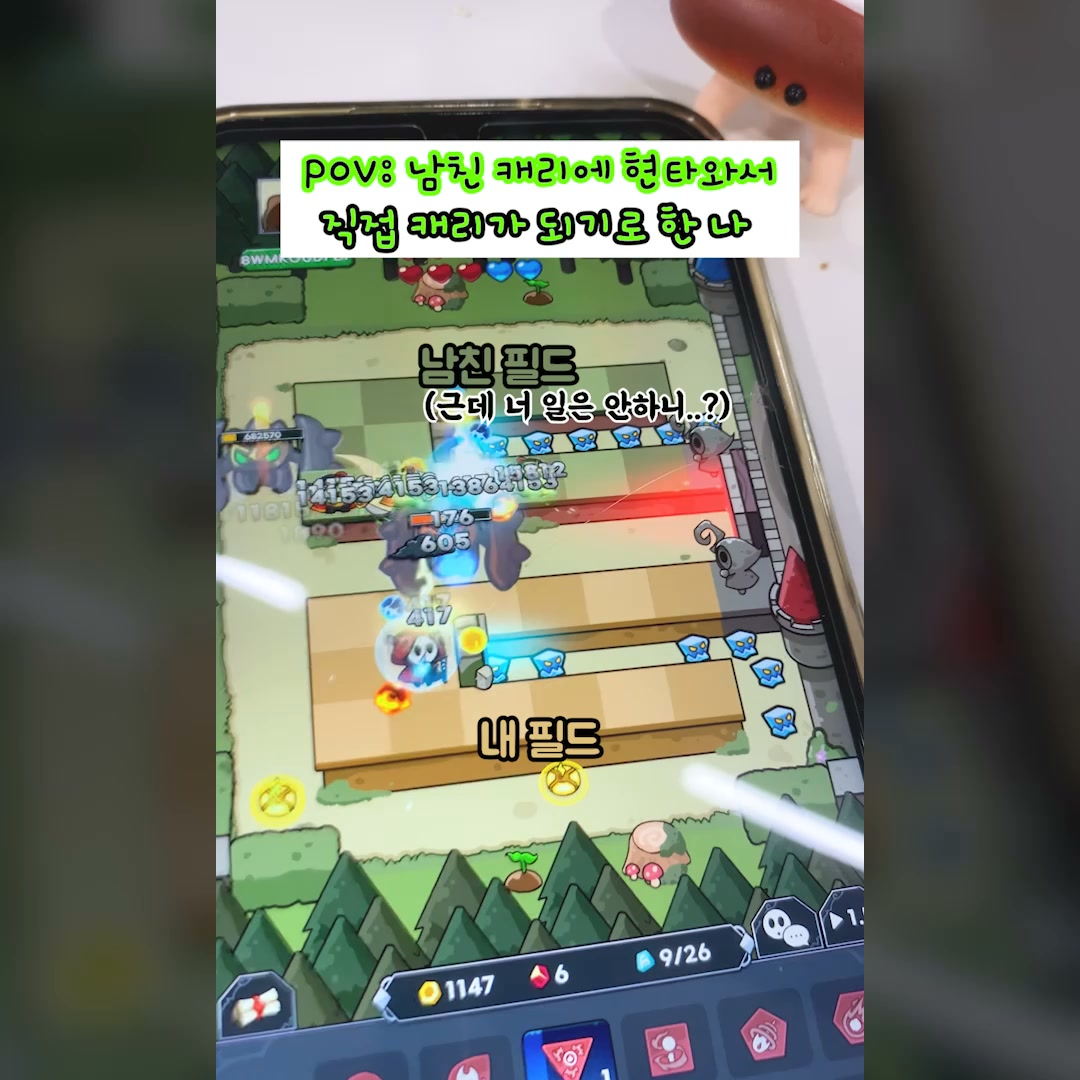
Spotlight 2 — The Korean lane (home market)
Korean copy sells the progression fantasy — fail and come back stronger, raise a wizard with no growth ceiling — and closes on the cooperation line: you cannot hold the wave alone. 104,553 exposure across a five-cut family.
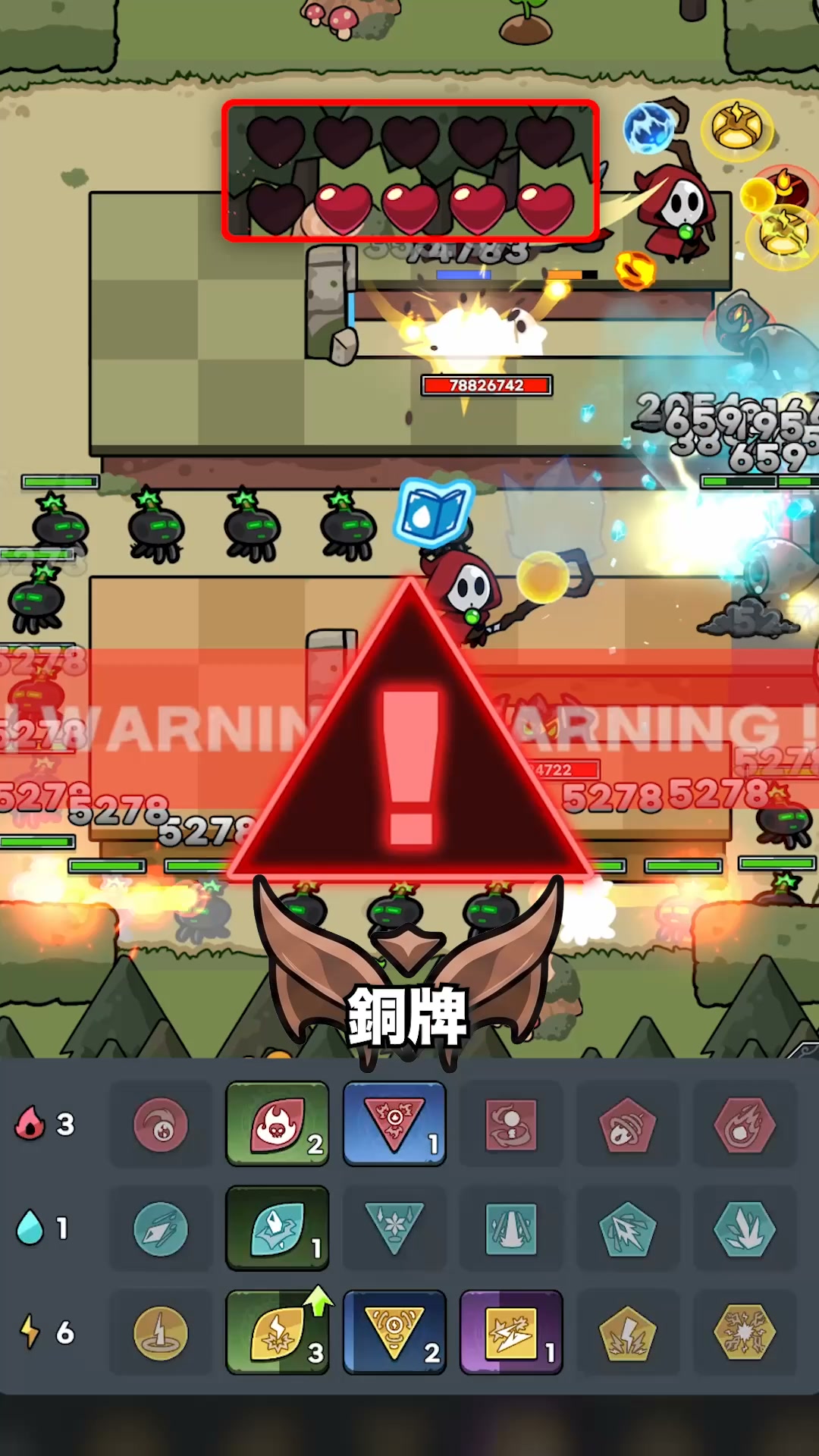
Spotlight 3 — The Traditional Chinese lane (Taiwan)
“Two-player squads, defend the last magic tower together” — squad framing for the Taiwan lane, 90,190 exposure, no reuse siblings in the record.
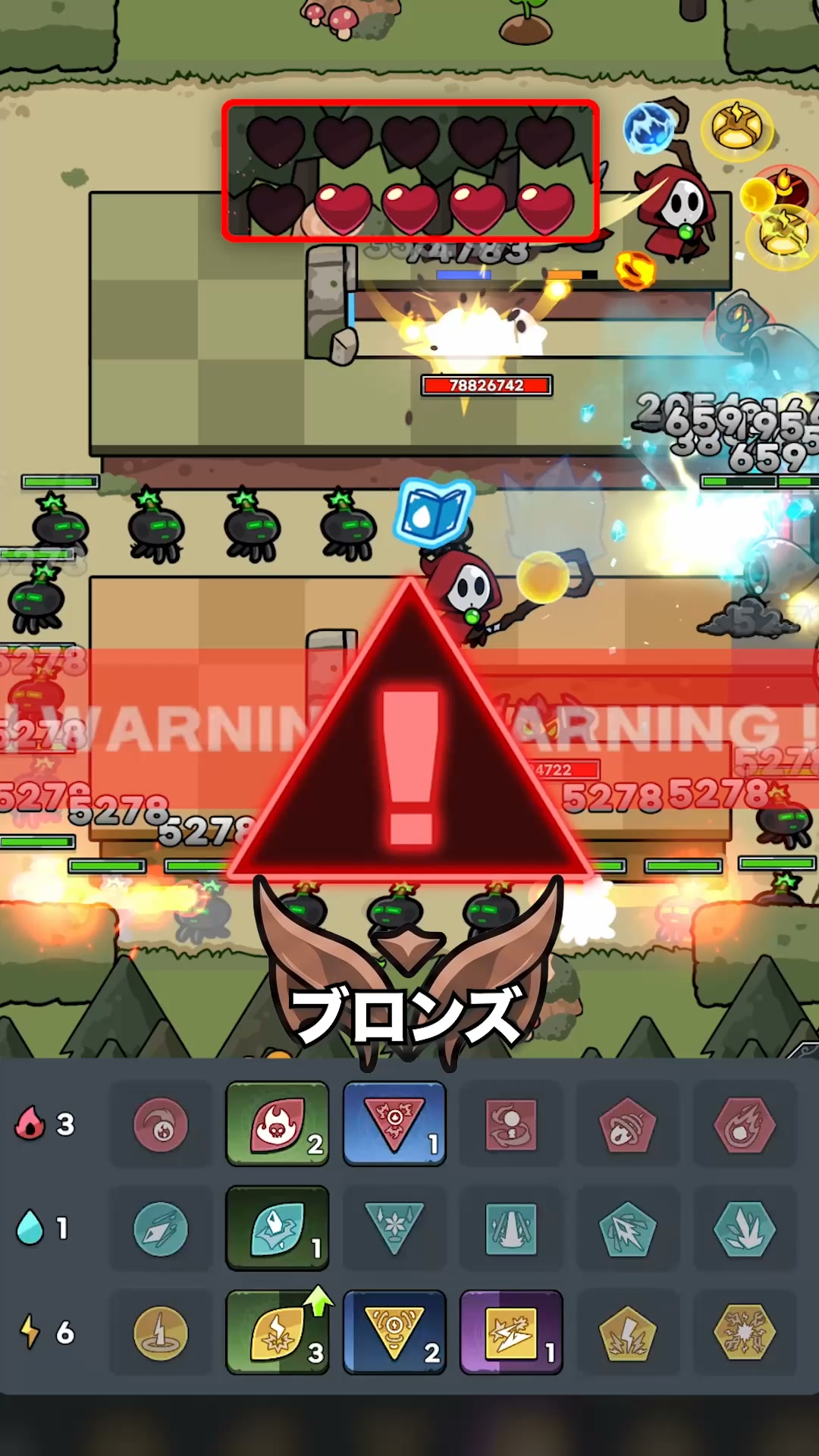
Spotlight 4 — The Japanese lane (Japan)
“Team up with friends, merge magic, defend the tower,” with a comeback-summon promise for the Japan lane. 83,372 exposure; the family stops running on September 26.
Cadence: one heavy day, then a slow burn
| Date (2026) | New creatives | New ad plans | Read |
|---|---|---|---|
| September 2 | 0 | 15 | Plan setup with no new assets |
| September 11 | 17 | 21 | Peak day of the window |
| September 16 | 7 | 12 | Second cluster |
| September 22 | 7 | 13 | Late-month re-up |
Seven activity days carry the window, and they alternate in shape: a plan-only day, then a day that ships both assets and structure. Twenty-five of the 54 creatives sit inside families that were reused five or six times over — the record’s similar_count field, which counts near-identical siblings of an asset. Thirty-four of the 54 creatives are still in reinvestment at the close of the window.
That is a steady-state profile rather than a launch spike. Assets are cut into families, the families are recut, and the winners keep running. Nothing here looks like a title buying its way up a chart; it looks like a title running a controlled test and holding the structure it started with.
The sister title: Bunker TapTap Defense
Bunker TapTap Defense comes from the same developer, the same genre family and the same launch season, which makes it the most useful comparison available — not because it shows what went right, but because it shows the same media grammar pointed at one country.
| Measure | Magic Defense | Bunker TapTap Defense |
|---|---|---|
| Countries in record | 5 | 3 |
| Top market | Korea: 32 coverage / 32 exclusive | Korea: 41 coverage / 40 exclusive |
| Everything else | US 15, Japan 9, Taiwan 8, Saudi Arabia 5 | UK 1, Poland 1, both shared |
| Ad plans | 133 | 75 |
| Creatives | 54 | 45 |
| Networks | 7 | 8 |
| Meta package | 126 plans on each of three surfaces | 47 plans on each of five surfaces |
| Public store install label | — | 100K+ downloads |
Three details in that table are worth pulling out.
- Both titles are single-country everywhere it matters. Bunker’s Korea coverage is 41 plans with 40 exclusive, and its only other markets are one plan naming the UK and one naming Poland. Same grammar as its sister: no cross-market plans, no regional clusters.
- Bunker runs a wider network spread on a smaller plan count. Eight networks against seven, but with five Meta surfaces at an identical 47 plans each, plus Admob at 14, Unity at 11 and Mintegral at 3. On a 75-plan buy, that is more surfaces sharing fewer plans — the opposite of concentration.
- The template tell. A large share of Bunker’s Meta-side creatives sit in the record with their headline and body fields still reading
{{product.name}}and{{product.brand}}. That is what a template-driven or catalog-style upload looks like when it reaches the record; it is a signal about how the assets were built, not a claim about what any user saw on screen. Still, the contrast with the four-language copy families on its sister title is hard to miss.
Store-side, Bunker is the more visible product: the public listing shows a 100K+ install label, and public chart tracking placed it in the Korean Google Play free charts in late September. Its record also carries a much higher lifetime estimated exposure, 5.20 million against 3.55 million. None of that contradicts the copy comparison; it just means an untemplated headline and a bigger install label are two different measurements.
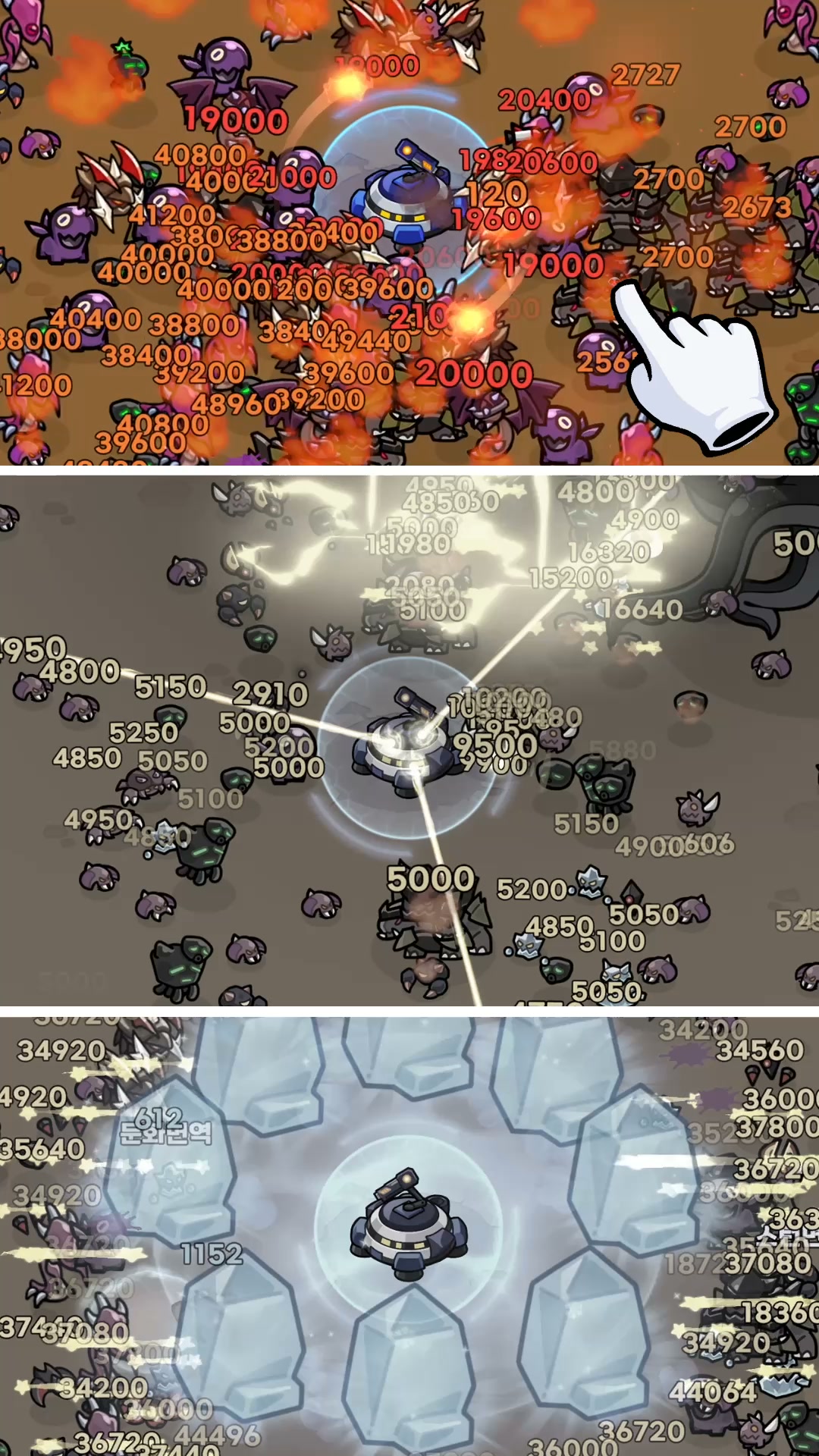
Spotlight 5 — The sister title’s workhorse (Meta)
274,408 lifetime estimated exposure — the single largest asset across both records — and its headline and body fields sit in the record as the raw strings {{product.name}} and {{product.brand}}. A template-built asset carrying the biggest load of the family’s two campaigns.
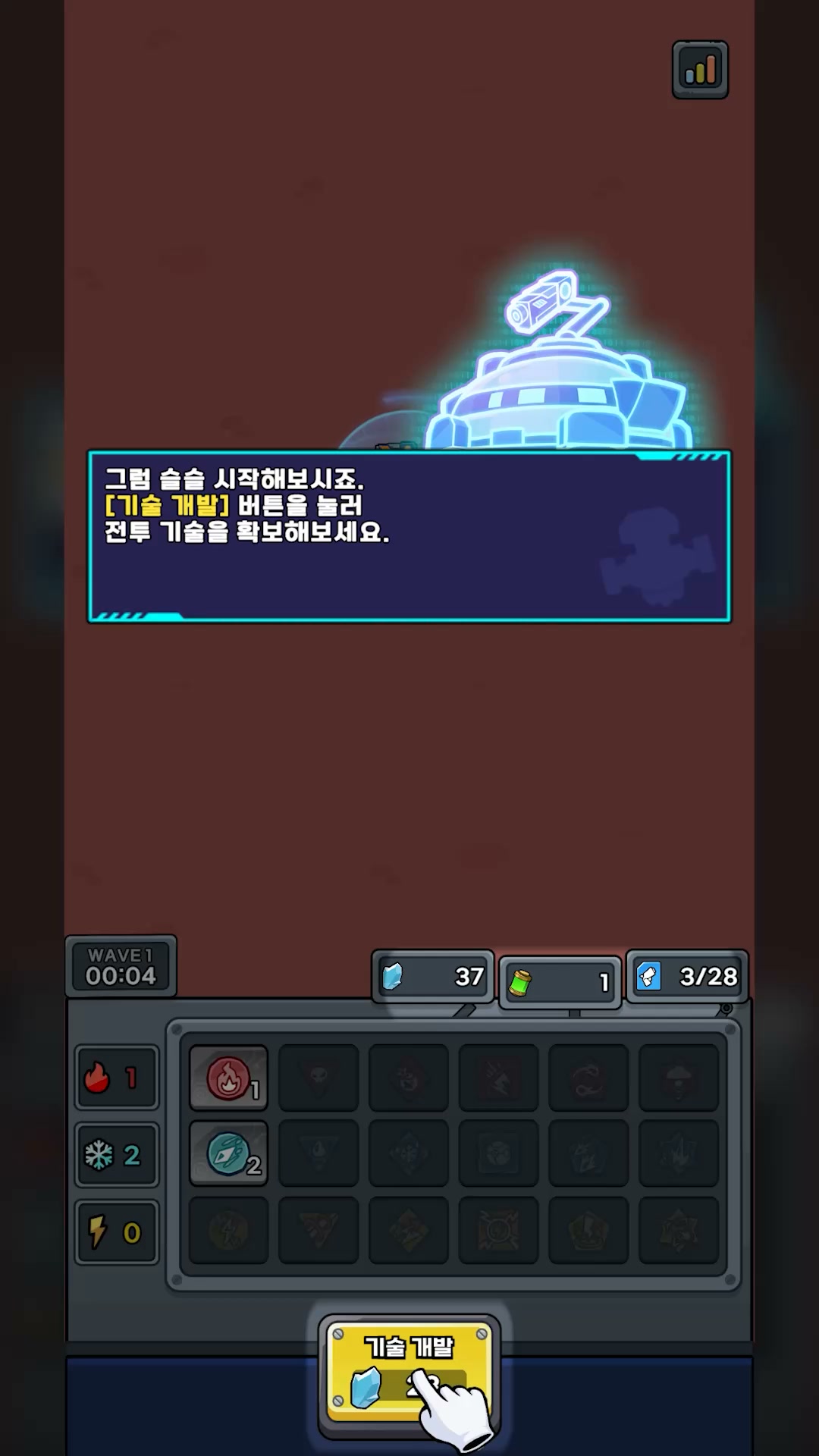
Spotlight 6 — The Korean burst line (Meta)
The localized copy that does exist on the sister title translates roughly to “a bunker defense that goes off in one minute,” with a body line about a single tap unleashing endless firepower. Short-burst framing for the home market, 180,404 exposure across a five-cut family.
Where the coverage and the record diverge
Put the two views side by side and the disagreement is narrow but real.
- “Small spend” is doing two jobs. Read as a total, 133 plans and 3.55 million lifetime estimated exposure is modest for a title charting in Korea. Read as a structure, it is the opposite of careless: five countries, each isolated, each with copy in its own language, all of it inside one Meta package. Media that is small in one dimension can be tightly specified in another, and the record only speaks to the second.
- The structural thinking the coverage criticized is the same thinking that shows up in the media. The argument was that an education company builds clean rule systems but misses emotion. That is a fair product critique. But rule-building is not a flaw in a buying structure — it is the entire mechanism. Country-sized units, one language per unit, no shared plans, no improvisation. If there is a through-line from the company’s origin to its advertising, it is this: it organized the buy the way it organizes a curriculum.
- The two titles are not two failures; they look like one test with two variable settings. Same developer, same genre, same window. One title spreads five markets with per-language copy; the other presses Korea alone and leans on template uploads. Whichever reading you prefer, they were not run the same way, and treating them as a single verdict misses that.
- What remains genuinely unproven is the part the coverage was most confident about. Chart position and emotional design are real questions, but neither is answered by the media record, and the media record is all we can measure. We can show how the units were cut. We cannot show whether cutting them that way worked — and no spend, install or retention data in our record would let us pretend otherwise.
CreativeScope take
Two tower defense titles from one Korean education company, and the interesting thing is not that the campaigns were small. It is that they were partitioned. Five markets, five single-country pools, four languages, one placement package, zero shared plans. Media structured like that is a deliberate choice about where attention goes — and it is the kind of choice that reads as timidity in a trade story and as discipline in a delivery record.
The lesson for anyone planning a small launch is worth stating plainly: when you cannot buy scale, buy specification. Isolating a market and giving it its own copy produces a cleaner test than spreading the same asset across five countries ever will — and if the product side of this pair is still a work in progress, the media side is already doing the thing media can control.
Related reading
- Last Echo Ads: A 346-Plan Bet on One Market — what concentration looks like when a single market carries an entire campaign.
- Obsidian Knight Ads: Early-2000s Browser RPG Aesthetics — another small-buy breakdown where creative families, not scale, do the work.
- Overgeared Hero Ad Creatives: 1.8M Downloads in 3 Months — the opposite end of the spectrum: 4,284 plans, 172 markets, and localization as a layer rather than a unit.
Want the raw structure behind this breakdown — every plan, creative and country for both titles and 4,000+ other tracked games? Explore the data at creativescope.ai/mcp.
FAQ
What is Magic Defense: Co-op Wizard TD?Magic Defense: Co-op Wizard TD is a cooperative merger tower defense game from Teamsparta Inc., a Korean company whose primary business is corporate training and AI education. Players generate random skills in battle, merge them into stronger versions, and defend alongside other wizards. Its tracked advertising record carries a July 15, 2026 release date.
How many ad plans does Magic Defense run?CreativeScope tracked 133 ad plans and 54 creatives for Magic Defense between August 29 and September 28, 2026, with 34 creatives still in reinvestment and 3,545,157 in lifetime estimated exposure for creatives active in the window.
Which countries does Magic Defense advertise in?Five appear anywhere in the record: South Korea (32 plans), the US (15), Japan (9), Taiwan (8) and Saudi Arabia (5). Every plan attached to any of those markets names exactly one country, so no plan places two of them together. The remaining 64 plans in the window carry no country in the record’s coverage list.
Is the game localized per market?The creative copy we could read covers four languages — English, Korean, Traditional Chinese and Japanese — mapping closely to the US, Korean, Taiwan and Japan lanes. Saudi Arabia’s five plans have no matching copy family in the set we could read.
How is Bunker TapTap Defense different?Same developer, same genre family, different media shape. Bunker TapTap Defense runs 75 ad plans, 41 of them covering Korea with 40 Korea-only, plus one plan each naming the UK and Poland. It spreads across eight networks on the smaller plan count, and many of its Meta-side assets sit in the record with raw template strings in their headline and body fields. Its public listing shows a 100K+ install label and its lifetime estimated exposure is 5,198,559.
Did these campaigns work?The tracked records cannot answer that. They carry plan and creative counts, country and network targeting, and a relative delivery-scale estimate — no spend, installs, conversions or revenue. Chinese industry coverage from September 24, 2026 reported both titles in the Korean charts but described their performance as modest; that is industry reporting, and it is labeled as such wherever it appears here.
Data notes
- Advertising figures: CreativeScope records for Magic Defense: Co-op Wizard TD (54 creatives, 133 ad plans, 34 reinvested, 3,545,157 lifetime estimated exposure, 7 platforms, 5 countries) and Bunker TapTap Defense (45 creatives, 75 ad plans, 20 reinvested, 5,198,559 lifetime estimated exposure, 8 platforms, 3 countries), window August 29 – September 28, 2026, deduplicated by plan and creative. The two records are reported separately and never summed. A second tracked record exists for Magic Defense under a different identifier; it is not used in this article and its counts are not mixed with the figures above.
- Coverage and platform shares are overlapping target-coverage shares under multi-attribution and do not sum to 100%. “Exclusive” = a plan whose delivery-country set contains exactly one market. Lifetime estimated exposure is a delivery-scale reference for creatives active in the window, not an impression count; the records contain no spend, install, conversion or revenue data and no country-level exposure.
- Creative copy: language families were read from the headline and body fields of the highest-exposure creatives in the window. Translations are summarized, not quoted verbatim. Template strings in the Bunker record are reproduced as the record stores them and are treated as a signal about asset construction, not as user-facing copy.
- Date anchors: Magic Defense tracked release date July 15, 2026; newest creative snapshots September 25, 2026 for Magic Defense and September 25, 2026 for Bunker TapTap Defense; ad snapshot month September 2026 for both. Bunker TapTap Defense’s tracked release-date field is a placeholder, so no launch date is claimed for it; its public listing shows an update on September 23, 2026 and a 100K+ install label, and its internal install snapshot is 224,488.
- Attributed context: developer identity, business background of TeamSparta Inc., product design criticism, quote-style descriptions of the genre leader, chart-position commentary and the “limited spend” characterization come from Chinese industry coverage dated September 24, 2026 and are industry reporting, not CreativeScope measurements. Store chart placements in late September 2026 come from public chart tracking.
Get this live in your agent
These rankings come from a single MCP tool. Free key, ask in plain English.
Full genre × market grid?
Team plan unlocks every genre and market cut, plus AI teardowns.